
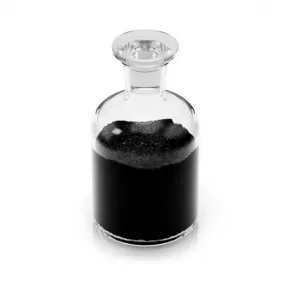
Potassium hexachlororuthenate(IV) K₂RuCl₆, a complex salt of ruthenium(IV), CAS 23013-82-3
Substance identification
The name, CAS 23013-82-3, and formula K₂RuCl₆ correspond to potassium hexachlororuthenate(IV). In the [RuCl₆]²⁻ complex, ruthenium has an oxidation state of +4. The theoretical mass fraction of Ru is about 25.79%, which falls within the original range of 25.27–25.91%; the brown powder is also consistent with catalogs, but actual specifications are confirmed by CoA.
Confirmed characteristics
- CAS: 23013-82-3
- Formula: K₂RuCl₆
- Molar mass: about 391.98 g/mol
- Ruthenium: 25.27–25.91% per TU 6-09-05-1087-80
- Item number: 5162720
Applications and preparation
The compound is used as a special ruthenium precursor in coordination synthesis and in the preparation of research materials. It cannot be automatically replaced with ruthenium(III) chloride or another chloro complex salt: the oxidation state, counterion, and stoichiometry differ. Catalytic properties are determined by the final system, not by the name of the starting reagent.
The sample weight is calculated based on K₂RuCl₆ and the actual Ru fraction. Dissolution, reduction, and ligand exchange are performed according to a verified procedure with control of the medium and temperature. For sensitive reactions, consider potassium, free chloride, water, and storage products. This item is not a certified ruthenium standard for calibration.
What to confirm before ordering
Specify CAS 23013-82-3, K₂RuCl₆, Ru range, purity, and pack size. Request CoA and SDS with analytical methods, water content, appearance, and impurity metals. For synthesis, specify acceptable impurities of other PGMs and alkali metals; if necessary, agree on XRD or spectral confirmation of the complex form.
Safe handling
Prevent dusting and contact of the reagent with eyes, skin, and respiratory tract. Use a fume hood, safety glasses, laboratory clothing, and compatible gloves per SDS. Reduction or heating should be carried out only with control of gaseous products. Residues, solutions, and contaminated containers should be collected separately as ruthenium-containing waste.
Готовы к сотрудничеству?
Свяжитесь с нами уже сегодня, чтобы обсудить ваши потребности в импорте и экспорте. Наша команда готова помочь вам!